ZHAW Showcases PEDvolution's PED Readiness Assessment Framework at the International Conference on Improving Energy Efficiency in Commercial Buildings & Smart Communities 2026
The PEDvolution team from ZHAW Zurich University of Applied Sciences (ZHAW) participated in the 13th International Conference on Improving Energy Efficiency in Commercial Buildings and Smart Communities (IEECB&SC'26), held on 11–12 March 2026, where Prof. Dr. Matthias Haase presented the project's PED Readiness Assessment (PED RA) Framework. The presentation formed part of the conference session on Positive Energy Districts, bringing together researchers and practitioners working to advance sustainable and energy-efficient urban development.
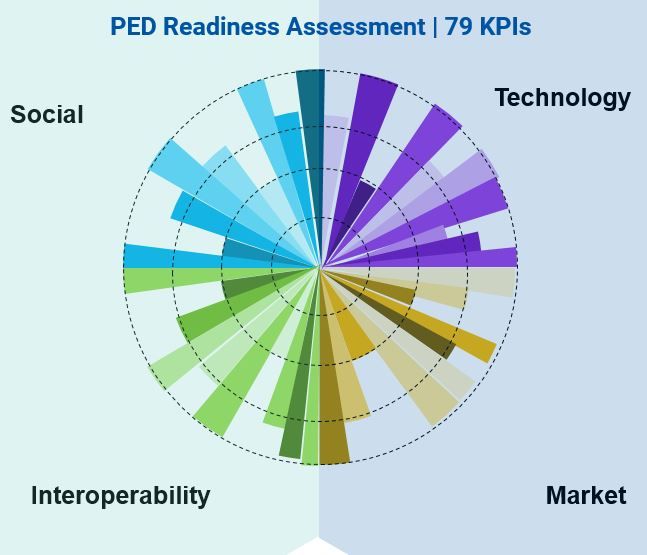
Developed as part of PEDvolution, the PED Readiness Assessment Framework is designed to help cities, planners, and project developers evaluate how prepared a district is to become a Positive Energy District. Rather than focusing solely on energy performance, the framework takes a holistic approach by considering four key dimensions—Technology, Market, Social, and Interoperability—to support informed decision-making throughout the planning, implementation, operation, and evaluation of PED projects.
During the conference, the ZHAW team presented the latest progress in the development of the framework, highlighting the methodology used to establish a harmonised set of 79 Key Performance Indicators (KPIs) that underpin the assessment. Organised across ten sustainability categories—including architecture and the built environment, energy performance, environmental and climate impact, economic and financial aspects, mobility, ICT and data, governance, circularity, social and community dimensions, and knowledge and innovation—the KPIs provide a comprehensive basis for evaluating a district's readiness and identifying pathways for improvement. Together, these categories operationalise the framework's four PEDvolution genotype dimensions—Technology, Market, Social, and Interoperability—ensuring that readiness is assessed through a balanced and holistic perspective.
The presentation showcased the collaborative process behind the framework, which combines insights from existing European PED initiatives, district sustainability assessment schemes, and extensive stakeholder engagement. More than 240 indicators from previous projects and established methodologies were analysed, refined, and consolidated into a transparent and practical assessment framework. By providing a common set of measurable indicators, the PED Readiness Assessment Framework enables cities and project developers to benchmark progress, identify gaps, prioritise interventions, and support the replication of Positive Energy Districts across diverse urban contexts.
Presenting the PED Readiness Assessment Framework at IEECB&SC'26 provided an opportunity to share PEDvolution's latest progress with the international research community and exchange knowledge with experts working on energy-efficient buildings, smart communities, and Positive Energy Districts. The framework will now be further developed into a calculation tool and validated in PEDvolution's demonstration sites, supporting the replication and scaling of Positive Energy Districts across Europe.
The conference paper is expected to be published as part of the official conference proceedings.
