From Research to Practice: ZHAW Explores Success Factors for Positive Energy Districts at ReSBE 2026
Zurich University of Applied Sciences (ZHAW) took part in the ReSBE 2026 International Conference, Reshaping the Built Environment through Sustainability and Circularity, held in Thessaloniki, Greece, from 20 to 23 October 2026. The conference brought together researchers and professionals to exchange knowledge and discuss approaches to making the built environment more sustainable.
Among ZHAW’s research contributions was the paper “Framework Development for Assessing Positive Energy Districts”, co-authored by Matthias Haase and Mihaela Meslec from ZHAW, together with Gerald Leindecker, Maria-Beatrice Andreucci and Marco Delli Paoli. Listed as a poster contribution in the conference’s Energy & Performance track, the paper presents research supported by the Horizon Europe PEDvolution project, the Swiss State Secretariat for Education, Research and Innovation (SERI), and IEA EBC Annex 83.
Assessing what makes Positive Energy Districts successful
As Positive Energy Districts (PEDs) become an increasingly important approach to sustainable urban development, understanding the conditions that enable their successful implementation and replication is essential. Assessing a PED requires looking beyond its energy balance to consider the wider technological, social, financial and regulatory conditions that shape its development.
The research addresses this challenge by drawing on an analysis of 115 Positive Energy Districts, including new and refurbished districts and PED Labs. Using the PED Lab Analysis framework as a basis, the authors examined experiences across these initiatives to identify recurring success factors and translate them into actionable practices.
The analysis resulted in 18 best practices, organised into six interconnected areas:
- Strategic planning and visioning: setting clear, ambitious goals and adapting plans to local conditions.
- Governance and stakeholder engagement: fostering inclusive collaboration, citizen participation and effective decision-making.
- Financial and business models: establishing viable business cases, diversifying funding and managing risks.
- Technological integration and infrastructure: combining renewable energy, storage, efficient consumption, smart grids and digital systems.
- Regulatory and policy frameworks: aligning PED development with supportive policies, urban planning and permitting processes.
- Monitoring, evaluation and learning: tracking performance, reviewing progress and sharing knowledge to support continuous improvement.
A framework to support planning and replication
An important insight from the research is that these dimensions are closely interconnected. Technological solutions alone cannot ensure the success of a PED: they need to be supported by appropriate governance, sustainable financing, enabling regulations and active stakeholder involvement. Likewise, approaches that work in one district cannot simply be transferred to another without considering local conditions and the different stages of development.
The proposed assessment framework therefore considers four core aspects—technological, social, financial and regulatory—in relation to stakeholders, life-cycle phases and scale. It aims to provide a structured and objective basis for planning, assessing and evaluating both potential and existing PEDs.
The paper also outlines practical recommendations based on the identified best practices. These include developing clear PED visions, establishing collaborative governance structures, exploring diverse financing approaches, prioritising technological interoperability and digitalisation, and implementing consistent monitoring and knowledge-sharing processes.
Strengthening the Evidence Base for Positive Energy Districts
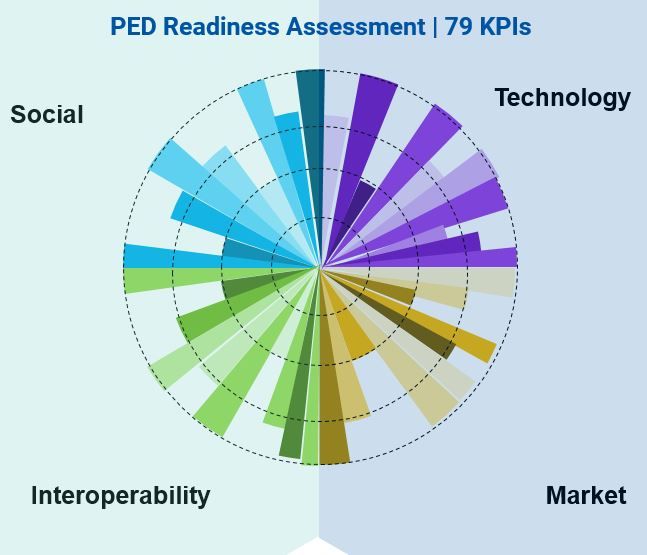
The paper builds on research undertaken in the context of PEDvolution and contributes to the project’s work on assessing Positive Energy Districts. In particular, its focus on identifying key success factors and developing a structured assessment framework complements PEDvolution’s efforts to evaluate PED readiness, understand district-specific challenges and support the development of integrated solutions.
Drawing on the experience of 115 PED initiatives, the research provides a broader evidence base for understanding the conditions that enable PEDs to succeed and be replicated. It reinforces the importance of looking beyond technological performance alone, recognising that effective planning, governance, financing, supportive regulatory frameworks and stakeholder engagement are equally important to the development of Positive Energy Districts.
ZHAW’s participation in ReSBE 2026 offered an opportunity to share these findings with the international research community, exchange perspectives on sustainable urban development and bring further visibility to PEDvolution’s contribution to advancing knowledge and practice on Positive Energy Districts.
Read the open-access publication:
Framework Development for Assessing Positive Energy Districts
https://doi.org/10.1007/978-3-032-35104-3_26